This blog post explains what the informed consent process is:
Outlining what is required on a consent form
Highlighting your rights as a participant
Explaining how this may differ when the participant is a child
Read the whole post below to learn more.
Week 3: Clinical Trial Education & Outreach Series
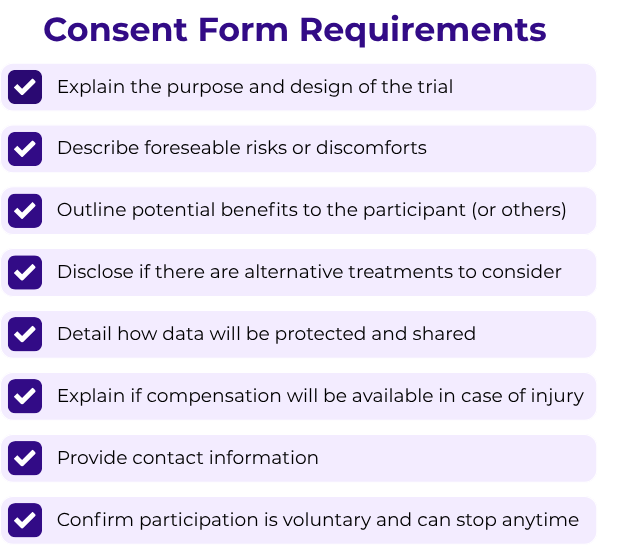
Participating in a clinical trial is always voluntary. If you decide to join a study, you'll enter a process called informed consent, where the research team discusses what the trial involves before you agree to take part. It will require you to sign a legal document, called a consent form, to confirm the conversation took place. There are several items that need to be covered in this form:
Your Rights as a Participant
It is important to understand your rights when you enroll in a research study, and the informed consent process should make those clear. You should always feel you have enough time to ask questions (and get them answered) and have details about the study explained in language you understand, not legal or medical jargon.
Entering a clinical trial is not always an easy decision and you shouldn’t feel rushed into making it. You can request a copy of the consent form to read over and discuss with friends, family, or other health care providers.
Signing the consent form at the start of a trial doesn't mean you've agreed to everything that comes after. As a study evolves, a good research team will check in with you, and you may be asked to revisit your decision. Throughout, you’re free to withdraw at any time.

When the Participant is a Child
This process changes slightly when the person enrolling in the trial is a minor, since a child generally can't give legal consent. Instead, a parent or guardian gives what's called parental permission.
Depending on the child’s age and cognitive ability, some trials also require assent from the child directly. This means the research team explains the study in words the child can understand, often verbally or with a simplified form, and asks if they are willing to participate.
If a child objects, whether that’s honored often comes down to the study’s potential medical benefit. Because clinical trials often carry a real chance of helping the child's health, parental permission may take precedence over an objection when there is no better option available.
Assent isn't only about age, it's about whether a child can meaningfully understand what they're being asked to do. If a child's developmental status means they can't weigh the decision in a meaningful way, formal assent may not be required. That doesn't mean their reaction stops mattering, though. Signs of distress or resistance should still be taken seriously, even without a spoken "no". It's worth asking the research team directly how they'll address this, and how they'll watch for signs your child is uncomfortable once the trial starts.
When an Adult Can’t Consent
The same scenario can also occur for adults. If they don’t have the cognitive or developmental capacity to make the decision to join a trial independently, someone with legal authority (a legally authorized representative) will need to step in and grant permission instead. This might be a parent, spouse, or court-appointed guardian, depending on the circumstance. A good research team should still walk the participant through what’s happening in a way that they can understand, and stay alert to how they’re responding once the trial begins.
For More Information
Check out the Courageous Parent’s Network’s guide for a list of questions to ask during the informed consent process, or download this brochure developed by our partners at the RARE Project Network to learn more.
Read the first blogpost in this series by visiting: https://www.cacna1a.org/blog/clinicaltrial1
Read the second blogpost in this series by visiting: https://www.cacna1a.org/blog/clinicaltrial2