Ollie’s Story
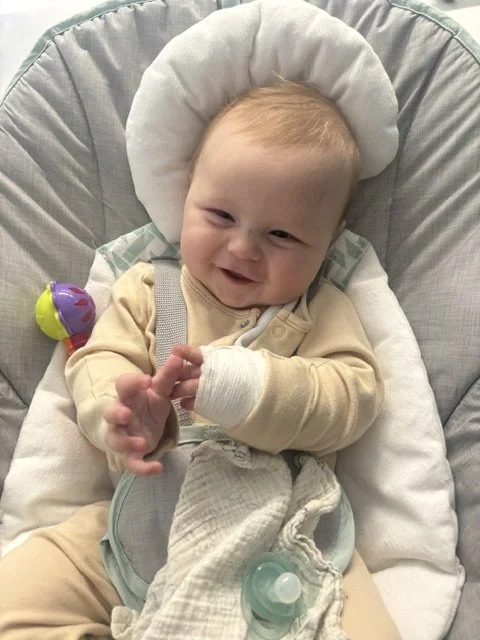
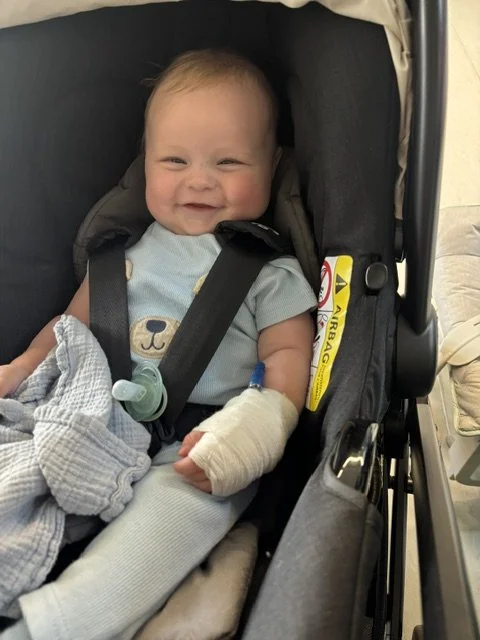
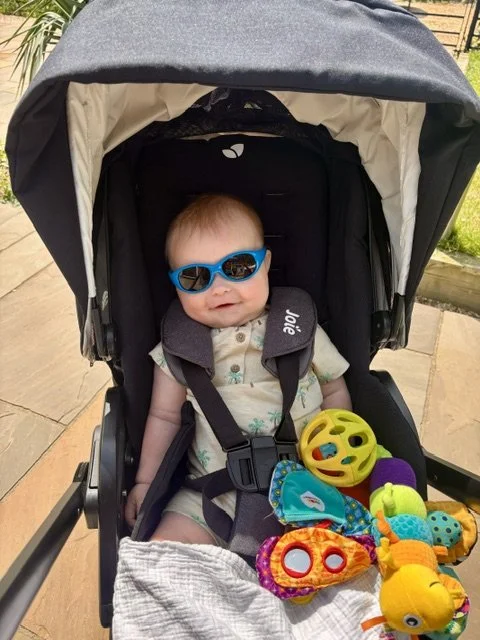
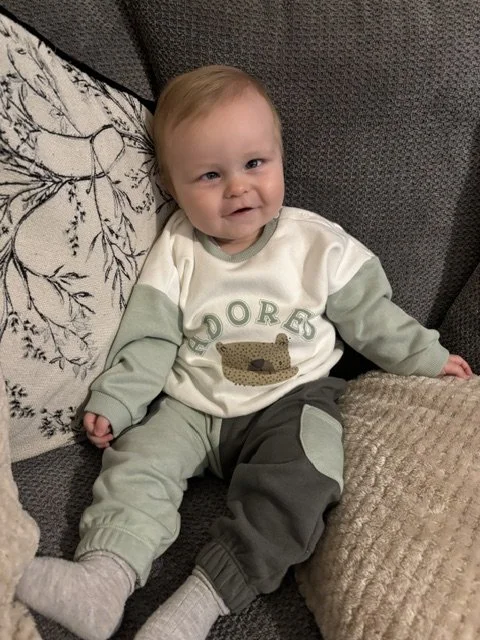
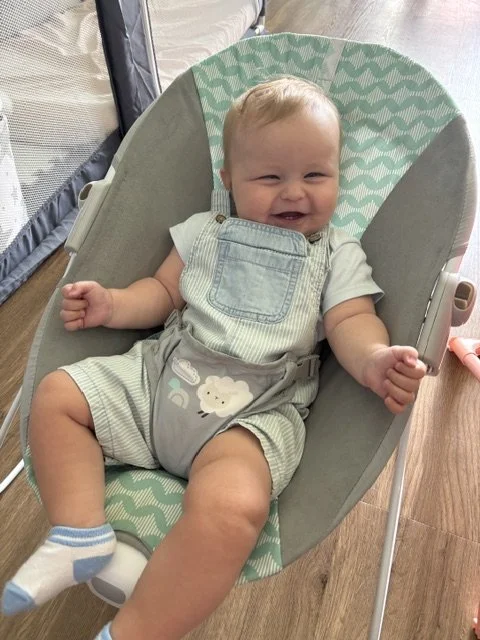
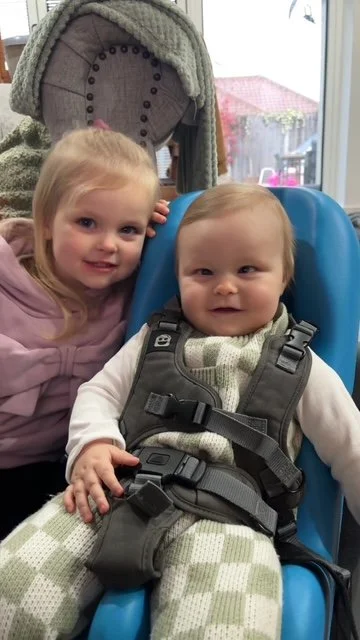
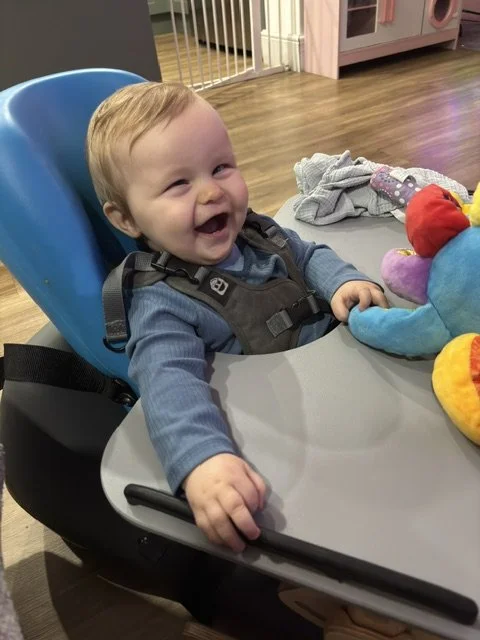
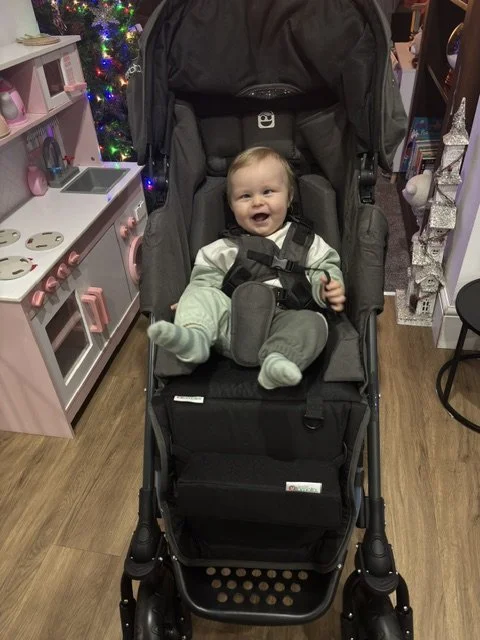
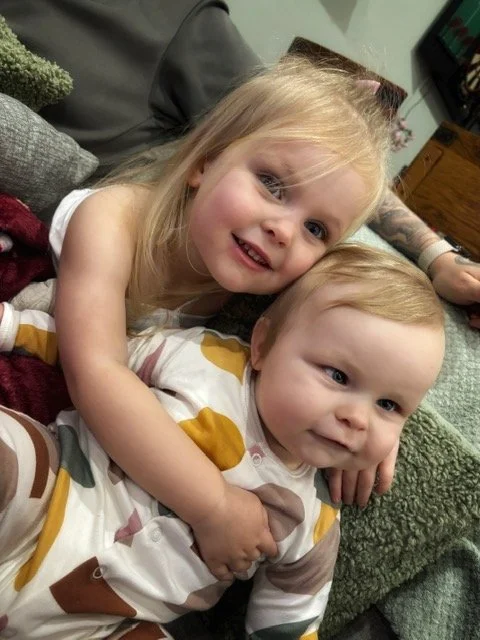
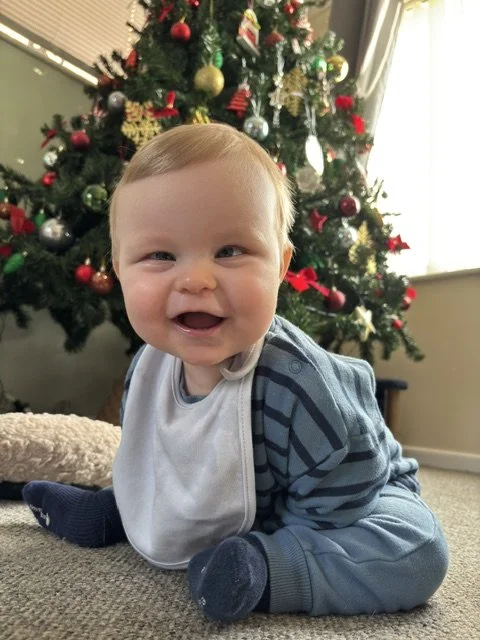
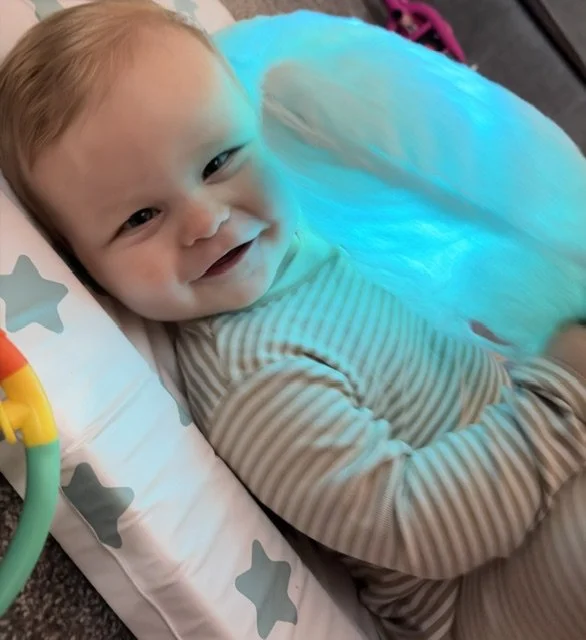
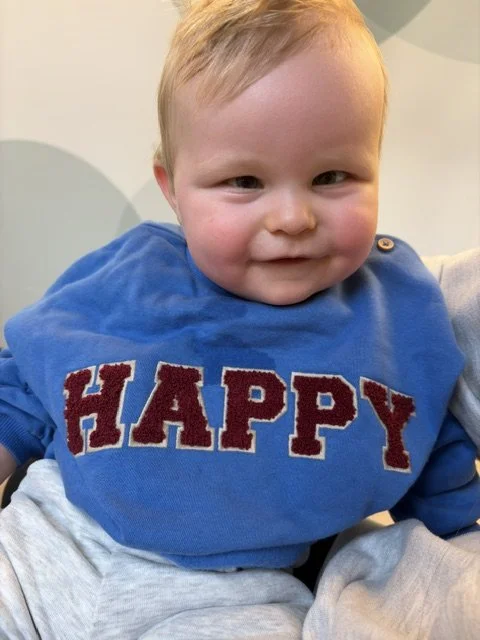
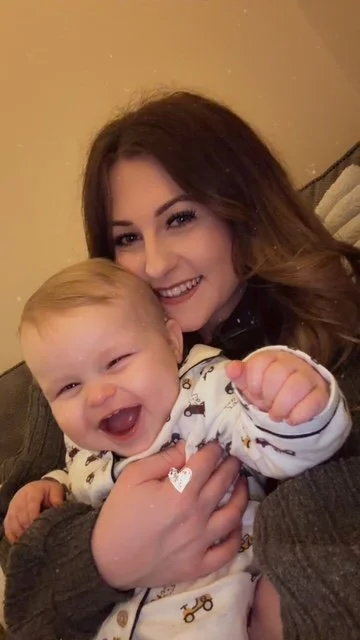
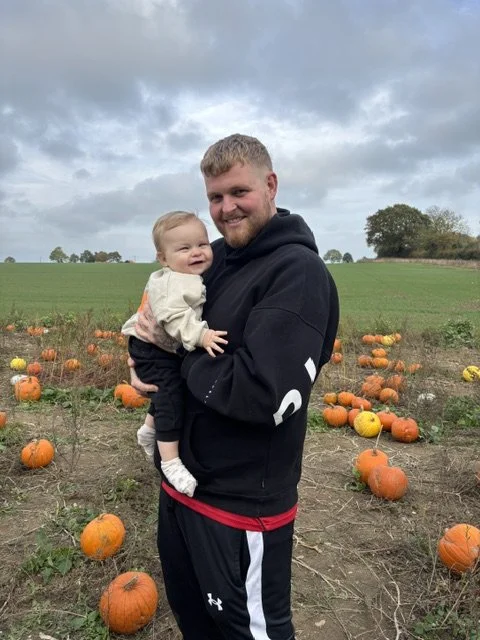
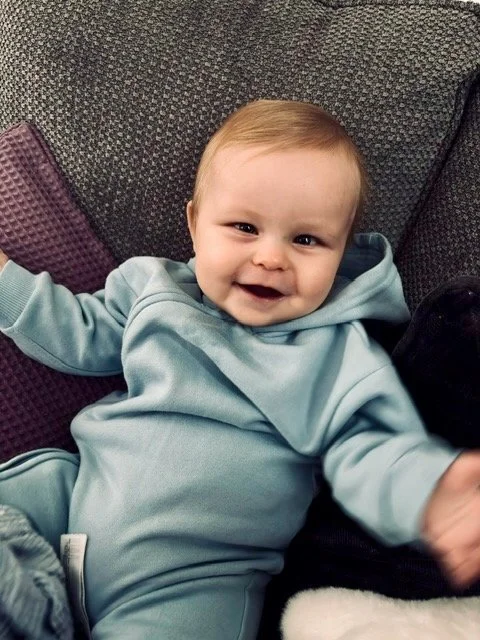
Ollie is a one-year-old from Suffolk, UK. His mom, Ellie, tells us that Ollie is the happiest, most cheerful little boy, full of personality and joy. His smile and laughter light up every room, and seeing his strength and happiness make the challenges of his journey a little easier to navigate. He loves interacting with his family and delights in sensory experiences, especially toys that light up or make gentle sounds. Ollie’s medical journey began very early in his life and has been shaped by his CACNA1A diagnosis. He lives with episodic ataxia type 2, paroxysmal tonic upgaze, cerebral visual impairment, and low muscle tone — conditions that affect how his body moves, how he sees the world, and how he experiences each day. Yet, his curiosity, determination, and joy for life shine through every day, reminding everyone around him that ability takes many forms and that resilience and personality are as important as developmental milestones.
Variant: c. 4530C>G p. Ile1510Met (I1510M); denovo
History
Ellie explains that from early on, she noticed Ollie’s eyes had a noticeable turn. While she understood this could be common in newborns, it didn’t resolve and remained clearly apparent beyond six weeks of age. She also observed a strong left-sided preference, which she raised with the health visiting team. As a result, referrals were made to both physiotherapy and ophthalmology.
During infancy, Ollie required regular weight checks because he wasn’t gaining weight within the expected range. By three months old, he was still unable to hold his head up and was extremely wobbly. This led to a brain MRI. Although the scan came back normal, the early signs of Ollie’s challenges were already clear. As time went on, he began experiencing frequent episodes of significant body jerkiness that mimicked seizure-like activity and caused ongoing concern.
Even though Ollie struggled physically, his bright little personality always shone through. He had a beautiful way of connecting with people around him, even if he wasn’t yet using his hands or moving like other babies his age. Milestones that many children reach naturally have required patience, persistence, and support for him.
Over time, it became clear that balance and coordination would be ongoing challenges. Today, at one year of age, Ollie is not yet able to sit independently or feed himself — not because he isn’t trying, but because his body doesn’t always respond the way he needs it to. Simple movements can take enormous effort, and progress often comes in small but deeply meaningful steps.
Despite the physical challenges he faces, Ollie is socially aware, expressive, and incredibly determined. He connects through smiles, interaction, and presence, reminding us daily that ability is not defined by milestones alone. His journey is one of resilience, strength, and learning to celebrate progress in all its forms.
From the beginning, Ollie’s body has worked harder than most. Balance and coordination do not come easily, and movements that are automatic for other children require focus, effort, and patience for him. His vision challenges can make the world feel unpredictable, and his low muscle tone makes even simple physical tasks exhausting.
There are moments of uncertainty and worry, but also moments of immense pride. Ollie continues to show resilience in ways that can’t be measured by milestones. He connects through presence, expression, and determination — reminding us that progress doesn’t always look the same, and that strength often appears quietly.
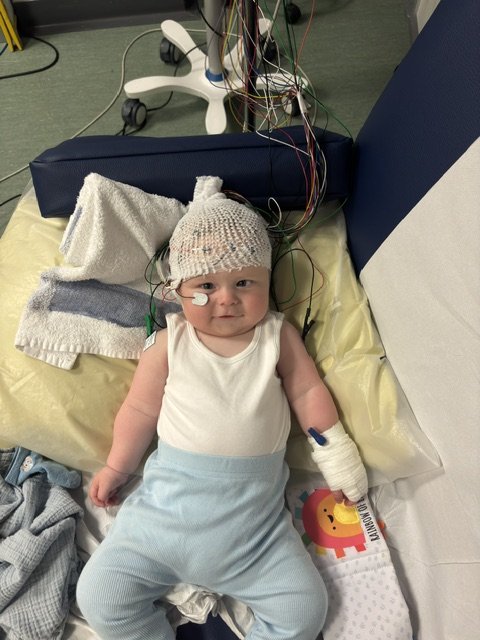
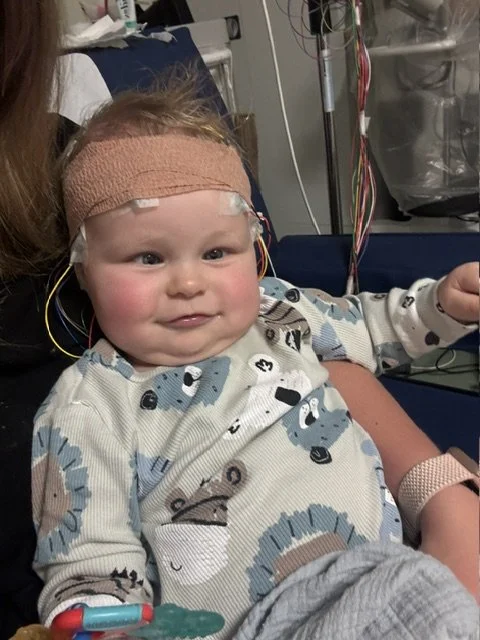
As Ollie has gotten older, he has begun experiencing sudden jerks and episodes in which his eyes roll upward. These moments are frightening, and we didn’t know what was happening. They often led to visits to A&E, and it took persistent advocacy — countless emails and phone calls — to push for further testing, including EEGs. Ollie was urgently admitted and underwent a wide range of investigations: EEG, genetic testing, chest X-ray, and ophthalmology assessments — all of which initially provided no answers.
The wait for genetic results was long and incredibly stressful. Finally, at six months old, Ollie received a diagnosis: a CACNA1A missense variant-related disorder and Episodic Ataxia Type 2. We later learned that Ollie’s variant is de novo, making him truly rare and uniquely his own.
Therapies/Education
Ollie is not yet in formal education, but he receives home-based support sessions every two weeks, focusing on sensory development and engagement. These sessions help him explore his environment, build skills, and manage sensory input in a safe and supportive way.
He also benefits from a range of therapies that support his development and help him engage with the world. He attends physiotherapy to improve strength, balance, and coordination, and uses orthotics to support his posture and movement. Occupational therapy supports everyday skills and coordination, while sensory interventions help him manage overwhelming sensations and allow him to explore his environment with confidence. He also receives speech and language therapy to support communication and interaction. Together, these therapies allow Ollie to build skills at his own pace and continue showing his determination, resilience, and joy for life.
Diagnoses
Hypotonia
Episodic ataxia type 2
Paroxysmal Tonic Upgaze (PTU)
Cerebral Visual Impairment (CVI)
The impact of a genetic diagnosis
This journey has been filled with worry and uncertainty, but it also marked the beginning of understanding Ollie’s world and how his body and brain work differently. It has allowed us to access the right supports and celebrate the incredible determination, resilience, and spirit he shows every single day.
For Those Newly Diagnosed
Finding out your child has a rare condition is a shock to the system — something you never imagined happening to your own baby. Give yourself permission to feel everything: the fear, the sadness, and the uncertainty. Allow yourself the time to grieve and to slowly accept the new path ahead.
Every day will bring new challenges and new learning, but it will also show you your child’s incredible strength. Their determination, courage, and little victories will amaze you in ways you never thought possible, and you will find yourself bursting with pride over the smallest achievements.
One of the most important lessons we’ve learned on Ollie’s journey is to always advocate for your child. Trust your instincts, ask questions, and push for the support and assessments your child needs. You know them best, and your voice can make all the difference in helping them access care, therapies, and opportunities to thrive.
Finally, it’s okay to have days where you feel completely overwhelmed or even break down. You are only human, and letting yourself feel these emotions doesn’t make you weak — it makes you real. In time, you’ll learn to celebrate not only milestones, but also moments of connection, joy, and resilience. Your love, patience, and presence are what truly matter, and you are never alone on this journey.