Clarify CACNA1A
Welcome to the CACNA1A Foundation blog: updates on current research, advocacy efforts,
therapy options, community activities and real life experiences of caregivers.

Lay Summary of the 2023 Research Roundtable
The CACNA1A Foundation hosted its second Research Roundtable: Collaborating to Accelerate the Path to CACNA1A Clinical Trials on October 9-10, 2023. The overarching purpose was to exchange ideas and build collaborations among the CACNA1A Research Network to develop CACNA1A-specific treatments and push them into clinical trials for FDA approval.
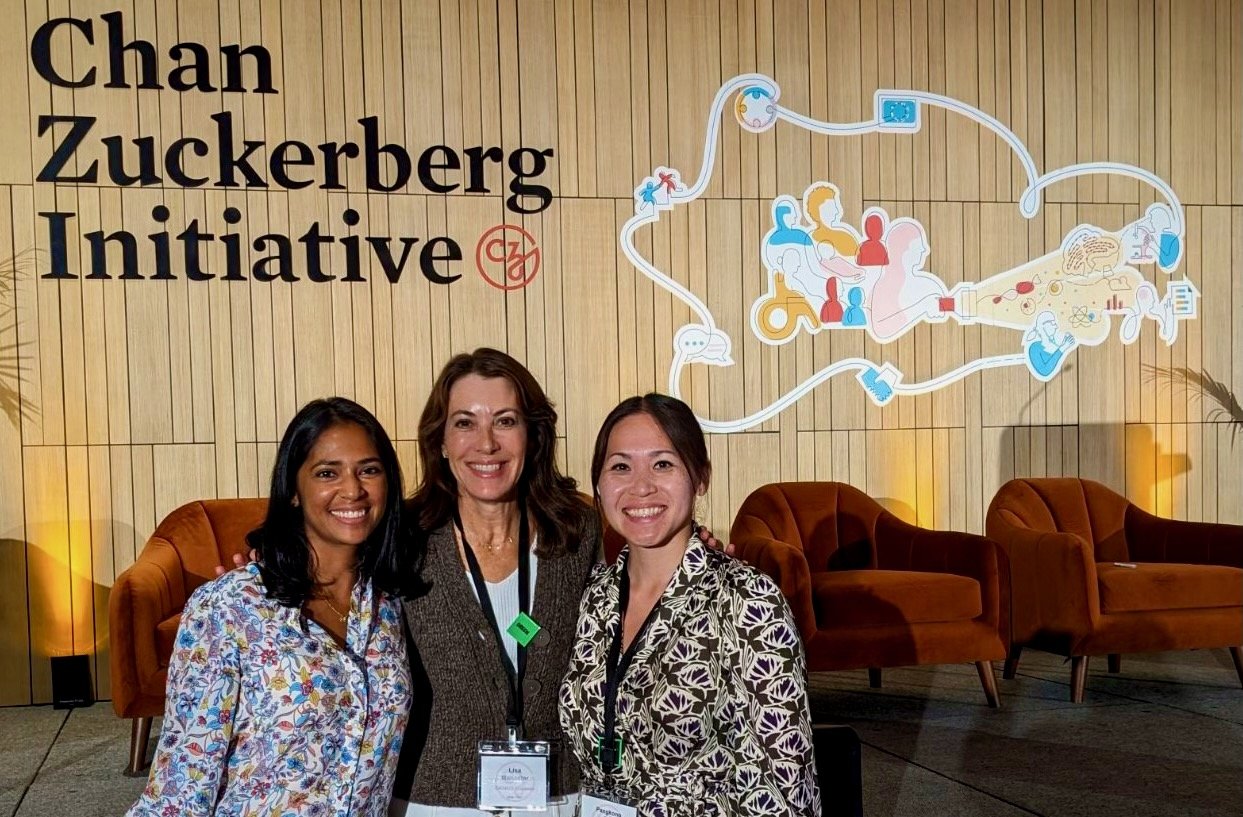
Learning, Building Community & Celebrating Wins at the CZI Science in Society Annual Meeting
In 2021, the CACNA1A Foundation received a 3-year Rare As One (RAO) grant from the Chan Zuckerberg Initiative (CZI) to build our capacity. In September 2023, we were invited to attend the Chan Zuckerburg Initiative’s (CZI) Science in Society Annual meeting held in Newport Beach, California. There, we joined representatives from other organizations who had received funding from CZI to learn, build community, and celebrate wins. Board members Lisa Manaster and Sunitha Malepati were joined at the meeting by Pangkong Fox, PhD, the CACNA1A Foundation’s Science Engagement Director, who was invited to speak about our patient-driven initiatives with COMBINEDBrain and Rare-X.

Lay Summary of the September 2022 Research Roundtable
The CACNA1A Foundation hosted its first Research Roundtable: Collaborating to Accelerate the Path to CACNA1A Clinical Trials on September 22nd and 23rd at the New York Academy of Medicine in New York City. It was a historic event with 37 of the world's experts on CACNA1A, ion channels, genetics, ataxia, epilepsy, hemiplegic migraine, and eye movement disorders convening for the first time ever. Goals included identifying gaps in understanding how CACNA1A variants lead to disease and developing therapeutic treatments that will have the greatest impact on those living with CACNA1A-related disorders.
The two-day conference was divided into three sessions, each with four presentations, followed by a facilitated discussion. The meeting closed with a wrap-up session focused on next steps for the CACNA1A Foundation and the CACNA1A Research Network to move treatments into the clinical trial pipeline. Read on for a summary of the presentations.

Advocacy Series (part 2): Litigation Strategy
Whether it’s a problem with a school, health care provider or insurance company, recreational program, or even a city sidewalk, U.S. laws are strong and provide ample means of rights enforcement. Leading up to passage of the Americans with Disabilities Act (ADA) in 1990, Congress recognized that children and adults with disabilities have historically been marginalized, if not institutionalized. The “medical model” of disability had governed for decades, focusing on medical needs, “cures,” and other non-rights-based notions. The passage of the ADA signaled the modern era – an era of empowerment and self-determination, in which people with disabilities are treated with respect and dignity and afforded enforceable rights to live independently and on their own terms. We all deserve nothing less.

Feeding Resources & Therapies
While many children experience eating issues when they are young, children with developmental disabilities have much higher rates of "selective eating" than their typical peers. CACNA1A disorders can be associated with feeding issues as a result of autism, sensory processing deficits, motor impairments due to ataxia, or food intolerances. CACNA1A mom, Celine Carayon, explains that what she thought were “latching” and “reflux problems” when her daughter was a baby turned out to be connected to her congenital ataxia, which has also affected her speech. Celine is not alone in this struggle: in fact, 80% of kids with special needs experience some sort of feeding difficulty. Celine was excited to discover that the NAPA Center (NAPA) offers a number of free online resources and tips that can be helpful to CACNA1A families like hers. While NAPA focuses on early intervention, these are life-long issues and may be of interest to parents of older children or adults.

The Value of Data
Would you like a better future for your child? Do you want scientists and pharma to invest in our disease? For researchers to find the small molecule or gene therapy that could help you, your child, or your family member? If so, don't limit the data available to researchers – they need your information!

Advocacy Series: Litigation Advocacy
Whether it’s a problem with a school, health care provider or insurance company, recreational program, or even a city sidewalk, U.S. laws are strong and provide ample means of rights enforcement. Leading up to passage of the Americans with Disabilities Act (ADA) in 1990, Congress recognized that children and adults with disabilities have historically been marginalized, if not institutionalized. The “medical model” of disability had governed for decades, reducing folks with disabilities to the pitied who needed to be taken care of, cured, or put in a home. The passage of the ADA signaled the modern era – a rights-based model under which people with disabilities are treated with respect and dignity, and afforded enforceable rights to live independently and on their own terms.

The COVID-19 vaccine & CACNA1A
In the United States, almost 40% of our population is fully vaccinated. Cities and towns are starting to lift restrictions, and we are beginning to see the light at the end of the tunnel. As a rare disease community, we should be relieved, yet this step brings with it increased anxiety and challenges; We are eager to see our friends and families, yet there is a need to balance security with socialization. With the recent approval by the FDA of the Pfizer-BioNTech COVID-19 vaccine for children aged 12 - 15, many families are wondering if they should vaccinate their children. The CDC is recommending the vaccine for this age group.

The CACNA1A Foundation is now part of CombinedBrain, ensuring more visibility for our disease.
The CACNA1A Foundation is excited to announce that we have been accepted as a member of COMBINEDbrain a non-profit consortium of 25 patient-advocacy foundations, each representing a different rare genetic neurodevelopmental disorder. COMBINEDBrain is devoted to speeding the path to clinical trial readiness for severe rare neurodevelopmental disorders by pooling efforts, studies and data.

While many children experience eating issues when they are young, children with developmental disabilities have much higher rates of "selective eating" than their typical peers. CACNA1A disorders can be associated with feeding issues as a result of autism, sensory processing deficits, motor impairments due to ataxia, or food intolerances. CACNA1A mom, Celine Carayon, explains that what she thought were “latching” and “reflux problems” when her daughter was a baby turned out to be connected to her congenital ataxia, which has also affected her speech. Celine is not alone in this struggle: in fact, 80% of kids with special needs experience some sort of feeding difficulty. Celine was excited to discover that the NAPA Center (NAPA) offers a number of free online resources and tips that can be helpful to CACNA1A families like hers. While NAPA focuses on early intervention, these are life-long issues and may be of interest to parents of older children or adults.

The Importance of Testing and Individualized Treatment for CVI
The world of cortical vision impairment (CVI) introduced my family and me to a whole new “language” regarding vision. We learned that for children who are born with CVI, getting this diagnosis early in life is crucial. It’s critical for any child diagnosed with CVI to be assessed with the CVI Range as early as possible because it provides the framework for individualized interventions.

Living Life With Cortical Vision Impairment
Our family was catapulted into the world of cortical vision impairment (CVI) after our youngest daughter, Addilynn, experienced a status epilepticus event that resulted in her suffering a traumatic brain injury (TBI) at the age of three.

Develop a Plan for CACNA1A-related Neurological Events
There are a few medical emergencies that can be caused by CACNA1A variants, including seizures and hemiplegic migraines. A Seizure (or hemiplegic migraine) Action Plan contains tailored guidelines on how to respond during a seizure or hemiplegic migraine, based on the patient’s medical history. It includes health and medical information specific to the patient. Importantly, a plan helps others to recognize seizures or hemiplegic migraines and details steps that can and should be taken to keep him or her safe from injury or damage caused by CACNA1A-related neurological events.

The Importance of Signing Up for the CACNA1A Natural History Study
The CACNA1A Natural History Study, designed and vetted by the Chung Lab at Columbia University, will provide valuable information to doctors and scientists about CACNA1A related disorders. Individuals will be asked to fill out detailed health questionnaires and provide comprehensive medical data, including MRIs and EEGs. The study has been approved by Columbia University’s Institutional Review Board (IRB), and all information will be de-identified and safely stored. Annual updates will characterize the course of the disease over time. It is a huge endeavor but by participating and telling your story, you will directly advance research on CACNA1A related disorders and contribute to a cure!

2020 Reflections & 2021 Goals
For all its challenges, 2020 was a transformative year in many ways. As our country continues to navigate the current challenges, including and especially the widespread impact of the COVID-19 pandemic, we have been heartened to see an overwhelming response to the CACNA1A Foundation’s work.

Mastering a school-based OT skill
Joyce Lucas, MA, OTR/L writes about teaching a student with a CACNA1A variant to write her name independently utilizing low tech assistive technology for support.

CACNA1A Foundation at AES2020
This past weekend we hosted a booth in the nonprofit section of the virtual exhibit hall at the American Epilepsy Society’s (AES) annual meeting. This conference is the largest meeting and exhibition in the world for those who share the common scientific and clinical interests of epilepsy and clinical neurophysiology. AES typically attracts more than 5,000 attendees dedicated to improving the quality of life for people living with epilepsy. Our booth’s visitors included clinical neurologists, researchers, pharmaceutical companies, other rare disease groups and various epilepsy-related corporations. We made some excellent introductions and formed new relationships that will further our mission of accelerating CACNA1A research.

CACNA1A & Autism: Are They Connected?
Many CACNA1A parents would argue a resounding, yes, there is a CACNA1A and autism connection. A quick search for “autism” in the CACNA1A/Cav 2.1 & Co. Facebook group reveals plenty of autism spectrum disorder (ASD) diagnoses and even more parents reporting autistic-like traits.
XEN007
For those in the US, there is some exciting news regarding a new medication being developed for our children with Gain of Function variants. The CACNA1A Foundation recently had a call with Xenon Pharmaceuticals, a clinical-stage biopharmaceutical company committed to developing innovative therapeutics that will improve the lives of patients with neurological disorders and central nervous system (CNS) conditions, with a focus on epilepsy.