
Arizona’s Story
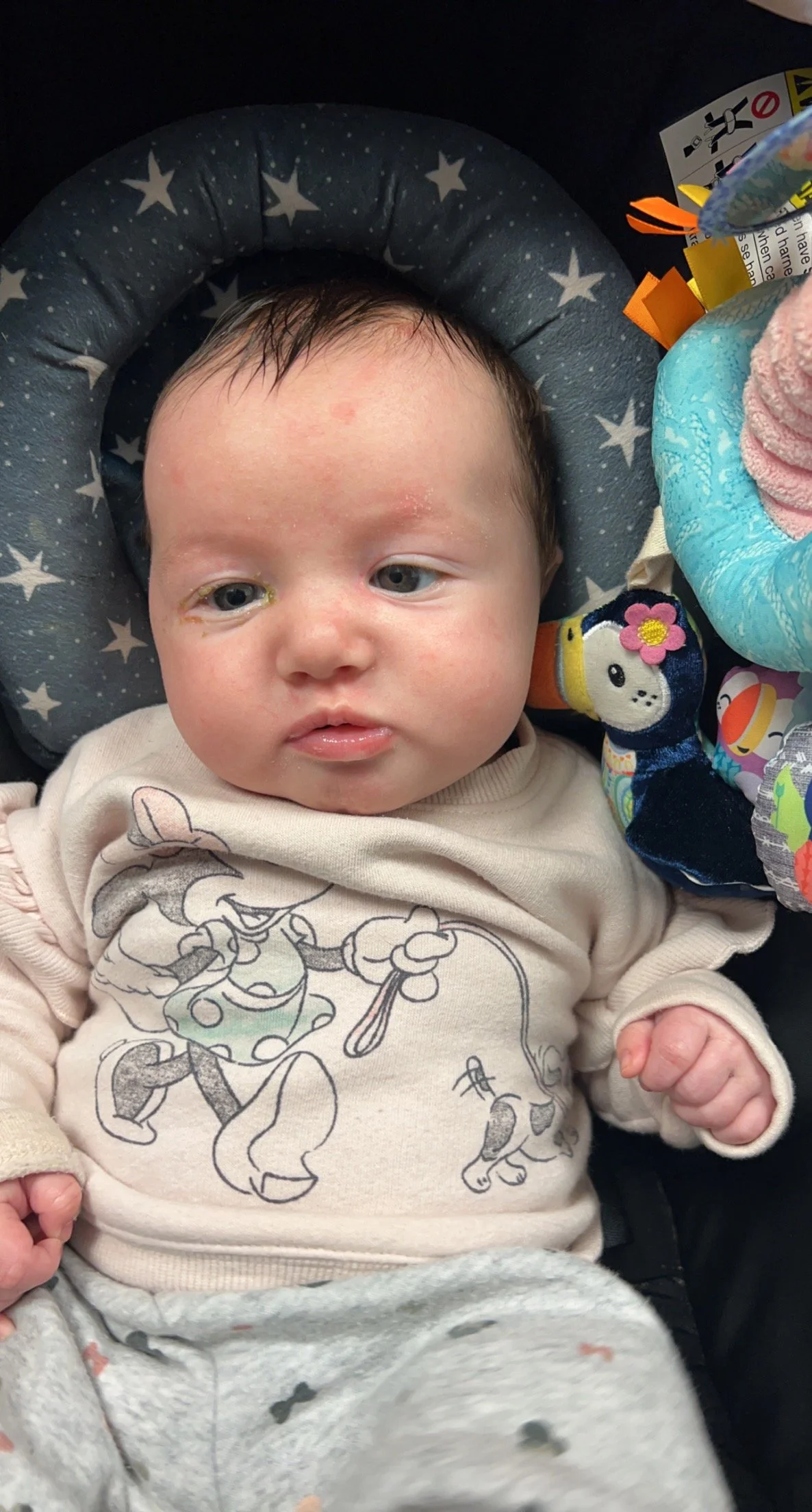
Arizona is an adorable 3-year-old girl from a small town in Pennsylvania's Harrisburg Metropolitan area. Her mom, Kaitlyn, describes her as a wonderful little helper who loves cleaning up and helping bring in the groceries. She is eager to be involved and independent, even though her body sometimes tires before she is ready to stop.
Variant: c.2042_2043del p.(Q681 Rfs*100)
History
We knew something wasn’t right when Arizona was about 6 months old, but the doctors kept pushing it off. As her mom and her advocate, I kept telling them that something needed to be done. Around 8 months old, they finally referred us to genetics. We had our first appointment when she was 15 months old, and that’s when we did genetic testing. We continue to meet with her genetics team today.
Arizona was delayed in meeting many of her early milestones. She didn’t lift her head until she was 8 months old, roll on her own until 9–10 months, or crawl until 11 months. She started walking at 15 months with AFOs and a walker.
She has had seizures since she was 11 months old. At 13 months, she was admitted to the hospital, and they called a code red because her seizures were so bad. Unfortunately, as she gets older, her seizures seem to be getting worse.
Arizona struggles with talking and is considered limited verbal. She has difficulty with noise, mobility, feeding herself, and getting dressed. Her body sometimes gives out on her when she walks, so she continues to wear AFOs and is getting a stroller to help with mobility.

Therapies/Education
Arizona has received physical, occupational, and speech therapy, and they have all been helpful. When she is discharged from therapy because she is doing well, though, she tends to lose some of the progress she has made and go backward.
Ariona attended preschool for two hours a day, three days a week, but stopped because she often separated herself from the group rather than interact with the other children. She also attended our local intermediate unit, and we are hoping she will return after summer break. She is currently on a waiting list for ABA therapy.
Diagnoses
CACNA1A-related Neurodevelopmental Disorder
Global Developmental Delays
Mild cerebral palsy
Autism
Seizures
For Those Newly Diagnosed
Do your research and learn as much as you can about your child’s CACNA1A diagnosis. When we first received the diagnosis, our doctor only told us to visit the CACNA1A Foundation website and read the information there. Some of what you read can feel overwhelming or scary, but remember that every child is different, and just because something can happen does not mean it will happen to your child. In addition, connect with other parents who have children with CACNA1A, ask questions, and talk with your child’s genetics team. Learning more and connecting with other families can really help.
Finally, don’t be scared and ask questions!